

When Old Folks Talk
July 15, 2011 by Admin · Leave a Comment

Grandma starts to talk and the smiles become forced and the eyes start to roll, because Grandma is going into a recital of her current medical concerns. There’s the hearing problem, the blood pressure, the bowel stuff, the swollen ankles, and that mysterious dizziness that pops up from time to time. Then there’s what she can’t eat anymore and the new medications. And don’t get her started on her teeth!
Welcome to Life as it Turns Out. The older we get and the more broken down we get, the more our world shrinks to our immediate environment and concerns. Finally our own body and its depredations constitute our most passionate focus. And that’s the way it is.
Yes, I am sure you have better things to do than listen to the ‘organ recital’ of the elderly.
Your life is full of meaning and activity and you can take your healthy body for granted. And this too shall pass, and your horizons will shrink and you will become grateful for anybody to listen to what is most important and pressing to you at that time, like your prostate.
So, please listen and respond with your own ‘organ recital”: an empathetic ear, a kindly eye, and a caring heart.
Pay your dues. Your turn is coming.
Preparing for Your Presentation
November 1, 2010 by Admin · Leave a Comment
Have you heard the rumor that thorough preparation is the most effective thing you can do to avoid stage fright? It’s true. And I want to talk about one little bitty part of the preparation process, the out loud rehearsal of your material before your delivery.
No, not silent reading to yourself, I want you to wrap your tongue around your words so they fit comfortably in your mouth. If there are some tricky phrases or difficult words, isn’t it better to find this out BEFORE you are in front of your audience? And, once discovered, you can fix them, can’t you? Of course you can.
Now you are ready to put some large photos of people on the other side of the room, and say your speech out loud to the pictures, moving your eyes from one face to another as you present a thought or a phrase. Let yourself get used to making eye contact AND talking at the same time. You probably do this quite naturally when you are not giving a speech – we’re just bringing unconscious communication behavior up to the conscious level so you won’t forget to do it.
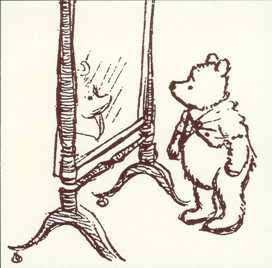
People earnestly ask me if they shouldn’t talk to themselves in front of a mirror. And I say, no they shouldn’t. Such a silly idea. I won’t even go into all the reasons that the idea has me shaking my head….sadly. But I do have a better idea. Add a real human being in the room with your pictures, one who will make you feel just a bit of self-consciousness.
Why? Because you want to get used to performing in the same state of excitation as will happen when you actually talk. You are going to toughen up with a little dose of the nerves so it doesn’t get you by surprise when you really speak.
Use the mirror to straighten your tie or check your lipstick. Use your neighbor to practice your speech.
If you want to learn more about how Dr. Fleming can help you improve your communication skills, please call her at telephone 415.391.9179 or send her an email at [email protected]
Carol Fleming, Ph.D., is the author of “It’s the Way You Say It”! Becoming Articulate, Well-spoken and Clear. A comprehensive guide to vocal development and improvement of communication skills. . To get your own copy, go to http://amzn.to/ItsTheWayYouSayIt
A Defense Against Stage Fright

You have to give a speech and you are already getting anxious. You are given the follow advice from some helpful person:
“Just picture your audience in their underwear.”
This is supposed to allay your personal intimidation by making your audience more psychologically vulnerable. They are in their undies and you have your pants on.
So, let’s give it a try. Take a good look at the picture above and see how safe and comfortable it makes you feel. And now imagine how real people would look in their underwear. (That should really scare you!)
Don’t you just want to say, “Oh for heaven’s sake, go put some clothes on!”
Can I suggest another approach? Think of your audience as people who have come to your party. They are your guests. You want them to be comfortable, to get something of value, and to have their need for information met. In other words, you should adopt a service attitude; “How can I help these people?”, “What do they need to know?” “How can I serve them?”
Focusing on their needs with a service attitude will take you out of the stage fright mode. Remember, public speaking is not about you. It’s about your audience. So give them the shirt off your back. It will make you feel a lot better.
If you want to learn more about how Dr. Fleming can help you improve your communication skills, or help you to overcome stage fright, please call her at telephone 415.391.9179 or send her an email at [email protected]
Carol Fleming, Ph.D., is the author of “It’s the Way You Say It”! Becoming Articulate, Well-spoken and Clear. A comprehensive guide to vocal development and improvement of communication skills. . To get your own copy, go to http://amzn.to/ItsTheWayYouSayIt
When Indirect Communication is the best Choice
September 27, 2010 by Admin · Leave a Comment
Suppose you wanted someone to know that you really appreciated the work they did. Shouldn’t you just go tell them? Well, that could be OK, I suppose, but it would really be gratifying to that person if you told Other People instead; people who are likely to get the message back to the individual.
Just imagine:
Joe is in the company cafeteria when a colleague says to him, “I heard your boss talking about your report this morning at the marketing meeting. He used your outline to show how the product roll-out would look. Way to go, fella!”
Of course, the boss could have just told you it was a good report, but I don’t think it would have had near the impact as knowing it had been bruited about the office.
- It wasn’t just a generalized ‘atta boy!’ of “feel-good” encouragement
- It wasn’t just a softly spoken private recognition between the two of you
It was out front, public declaration of your value. Just knowing that others heard it without it coming from you or being directed at you in front of others validates the integrity of the praise.
People are talking! Ain’t it sweet!?
Try it out yourself. Praise someone behind their back and see what happens. We are talking about backward gossip, aren’t we? I wish ‘pissog’ made a prettier word.
If you want to learn more about how Dr. Fleming can help you improve your communication skills, please call her at telephone 415.391.9179 or send her an email at [email protected]
Carol Fleming, Ph.D., is the author of “It’s the Way You Say It: Becoming Articulate, Well-spoken and Clear”. A comprehensive guide to vocal development and improvement of communication skills. To get your own copy, go to http://amzn.to/ItsTheWayYouSayIt
-
"It's The Way You Say It"
is the first comprehensive guide for speech and voice improvement. Click here to purchase Dr. Fleming's book from Amazon. Network With Me
