

The Freedom of Speech
December 27, 2011 by Admin · Leave a Comment
 Christopher Hitchens, the iconoclastic journalist, died of esophageal cancer this December 17. With the death of this man, we have lost a great voice indeed. Here are some words he wrote for us in the June issue of Vanity Fair. Their salience for me will be apparent; I hope they speak to you, too.
In the medical literature, the vocal “cord” is a mere “fold,” a piece of gristle that strives to reach out and touch its twin, thus producing the possibility of sound effects. But I feel that there must be a deep relationship with the word “chord”: the resonant vibration that can stir memory, produce music, evoke love, bring tears, move crowds to pity and mobs to passion.
We may not be, as we used to boast, the only animals capable of speech. But we are the only ones who can deploy vocal communication for sheer pleasure and recreation, combining it with our two other boasts of reason and humor to produce higher syntheses. To lose this ability is to be deprived of an entire range of faculty: it is assuredly to die more than a little.
My chief consolation in this year of living dyingly has been the presence of friends. I can’t eat or drink for pleasure anymore, so when they offer to come it’s only for the blessed chance to talk. Some of these comrades can easily fill a hall with paying customers avid to hear them: they are talkers with whom it’s a privilege just to keep up. Now at least I can do the listening for free.
Can they come and see me? Yes, but only in a way. So now every day I go to a waiting room, and watch the awful news from Japan on cable TV (often closed-captioned, just to torture myself) and wait impatiently for a high dose of protons to be fired into my body at two-thirds the speed of light.
What do I hope for? If not a cure, then a remission. And what do I want back? In the most beautiful apposition of two of the simplest words in our language: the freedom of speech.
……………………………………………………………………
This comes with my wishes for the happiest of New Years. Do talk, and sing, debate and laugh,
and yes, protest. Use your precious voice while you have it.
If you want to learn more about how Dr. Fleming can help you improve your communication skills, please call her at telephone 415.391.9179 or send her an email at [email protected]
Carol Fleming, Ph.D., is the author of “It’s the Way You Say It”! Becoming Articulate, Well-spoken and Clear. A comprehensive guide to vocal development and improvement of communication skills.
Amazing Grace
December 19, 2011 by Admin · Leave a Comment
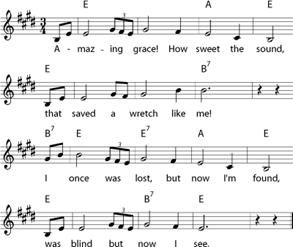
Twas Grace that taught my heart to hear…
I know! I know…now. I guess I wasn’t paying enough attention when the second verse of “Amazing Grace” rolled through my life. When I checked the lyrics of the song, before writing this, I found that out that Grace was to teach my heart to fear.
It didn’t work that way for me. Thank heavens.
While it is true that people come to me to learn about communication improvement, to get my opinion about something to do with their speech, voice or language, and to receive information and guidance, it is also true that they come to me to be heard; to have someone truly set aside all distractions, pre-judging, even focus, just to listen to the sound of their voice and receive them as wholly (perhaps holy) as possible.
What you say, how you say it and how you look when you say it. What is the first thing out of your mouth? What do you tell me repeatedly? At what point does anger creep into your voice? When does your voice wax and wane? How many bitter complaints come pouring out? Whose opinion really matters to you? When do your eyes glisten?
You have taught me to finally shut-up and let your presence register on me as deeply as possible. You have taught me that you cannot learn from me unless I have deeply listened to you first.
When you have run out of things to tell me, I will usually give you feedback on what I have just heard from you. If you are like most people, you will say, “You have hit the nail on the head!! How did you know!!” And I will have to answer, “Because you just told me.”
This is indeed an Amazing Grace that taught my heart to hear.
If you want to learn more about how Dr. Fleming can help you improve your communication skills, please call her at telephone 415.391.9179 or send her an email at [email protected]
Carol Fleming, Ph.D., is the author of “It’s the Way You Say It”! Becoming Articulate, Well-spoken and Clear. A comprehensive guide to vocal development and improvement of communication skills.
The Artists
December 15, 2011 by Admin · Leave a Comment
You’ve all heard of the importance of nonverbal communication. But have you ever wondered if it is all that it’s cracked up to be? Let me give you the evidence shown in the new film, The Artist.
- It is a ‘silent movie’ that allows you to experience how much meaning - both broad and subltle -there is to be had without words.
- Oh sure, from time to time, they throw a pinch of dialogue on the screen, but the meat of the movie is in the expressions, the context, the attitudes and movements that need no language to tell us what is going on.
- The music also moves the agenda in a nonverbal way.
Have you noticed that digital devices are fed streams – gushing rivers – of alphabetized code letters? Have we not come to see this alphabetic tidal wave as the alpha and omega of human communication?
But, have you also noticed that those who gorge themselves at the digital trough are frequently unskilled in the human nonverbal world of animal presence and subtle expression? This nonverbal world is the home of all human relationships worth having. This is the world where you are most fully alive and authentic. This is the world where you can fall in love.
See the picture and see how much of life you can know without a word being spoken.
If you want to learn more about how Dr. Fleming can help you improve your communication skills, please call her at telephone 415.391.9179 or send her an email a t[email protected]
Carol Fleming, Ph.D., is the author of “It’s the Way You Say It”! Becoming Articulate, Well-spoken and Clear. A comprehensive guide to vocal development and improvement of communication skills.
Finding the sound of your voice
November 7, 2011 by Admin · Leave a Comment
 Everybody has a musical instrument and it doesn’t cost a thing. It is your voice. Nothing on earth matches it for range, power, variety, and expressiveness. You undoubtedly use it for speaking, but are you singing? You should be. We live in a sonorous universe, all matter vibrates, and all creatures sing their songs. How about you?
All god’s creatures got a place in the choir
Some sing low and some sing higher
Some sing out loud on the telephone wire
Some just clap their hands or paws or anything they’ve got nowListen to the bass it’s the one at the bottom
Where the bullfrog croaks and the hippopotamus
Moans and groans in the big tattoo
And the old cow just goes “moo”
The dogs and the cats they take up the middle
Where the honey bee hums and the cricket fiddles
The donkey brays and the pony neighs
And the old grey badger sighs ohI have heard your story that you cannot carry a tune, how the mean teacher asked you to be silent during choral singing. But I have not heard that you have spent any time seriously learning how to match notes, produce tones or tap out a rhythm. Yes, music making certainly comes easily to many of us and there are some that must seek it out. Perhaps you need to start with some simple dance steps to sense the rhythms. Or you hum along with the church choir. Imitate the bird song you hear in your garden. Or you rock your infant daughter with your best version of “My Girl”.
When all else fails there are professional voice teachers that can help you get started.
Whatever it costs you, go for it. Music making is your birthright. No one can sing your song but you. Even if you are the old grey badger that just sighs, ‘oh’. Do it. The universe will be the better for it.
If you want to learn more about how Dr. Fleming can help you improve your communication skills, please call her at telephone 415.391.9179 or send her an email at [email protected]
Carol Fleming, Ph.D., is the author of “It’s the Way You Say It”! Becoming Articulate, Well-spoken and Clear. A comprehensive guide to vocal development and improvement of communication skills.
The Secret of a Good Speech
July 29, 2011 by Admin · Leave a Comment

I received this thank you note from a client:
Dear Carol, Lovely accolades after my speech and I did want to send you a thank you note! To be able to present my thoughts in a way that pleased me was a very happy moment. Not a word was shared about the how and why of it, but you and I know! Sending best thoughts and warmest thanks to you! xxx ————————————
Of course it is always nice to get thank you notes. But did you get the part that my work with her was going to be our little secret? Some clients call me their ‘secret weapon’ and tell me that they don’t want to share how they got so good with others. The business woman in me regrets this lack of acknowledgement and referral, of course. But the therapist side understands their need to own the effective speaking as their own talent and achievement.
Which leads me to ask how many skilled presentations, powerful speeches and touching comments you have heard and just assumed were the result of that speaker’s natural abilities and efforts? Just talented, right? · What if you found out that they floundered and stuttered at the beginning just like you do? That they had been paralyzed with stage fright? ·
What if you knew that many of these great speakers sought professional help, received thoughtful guidance, worked very hard, and rehearsed? You might ask these speakers if they had a ‘secret weapon” in preparing their remarks. Or if they might be able to recommend a speaking coach so you can learn to be as good as they were. Be interesting?
Please don’t let your fear of public speaking stop you. Get help like many others do. Dr. Fleming can be contacted at telephone number 415.391 9179 or [email protected]
When Old Folks Talk
July 15, 2011 by Admin · Leave a Comment

Grandma starts to talk and the smiles become forced and the eyes start to roll, because Grandma is going into a recital of her current medical concerns. There’s the hearing problem, the blood pressure, the bowel stuff, the swollen ankles, and that mysterious dizziness that pops up from time to time. Then there’s what she can’t eat anymore and the new medications. And don’t get her started on her teeth!
Welcome to Life as it Turns Out. The older we get and the more broken down we get, the more our world shrinks to our immediate environment and concerns. Finally our own body and its depredations constitute our most passionate focus. And that’s the way it is.
Yes, I am sure you have better things to do than listen to the ‘organ recital’ of the elderly.
Your life is full of meaning and activity and you can take your healthy body for granted. And this too shall pass, and your horizons will shrink and you will become grateful for anybody to listen to what is most important and pressing to you at that time, like your prostate.
So, please listen and respond with your own ‘organ recital”: an empathetic ear, a kindly eye, and a caring heart.
Pay your dues. Your turn is coming.
How to handle male ‘banter’ as the only woman on my team
June 24, 2011 by Admin · Leave a Comment

This question appeared in an on-line column, as follows:
Q: I’m the only woman in an otherwise male sales team. Lately, I’ve felt that some of my colleagues have been dismissive and patronizing towards me, but when I confronted them about it they said they were only joking and it was just “banter. Should I make a formal complaint or grin and bear it?
There were three answers submitted to this by three men:
- this reveals a dismissive attitude; you are perceived as a threat and should report it
- don’t report it; give it back and humiliate them
- this banter reveals acceptance; you are in on a shared joke
Do you wonder why this woman is confused? (What’s the matter?! Can’t you take a joke?) This is an extremely complicated communication situation and I warn you right now, there is no easy answer.
You must first try to determine if the person meant to be hurtful or playful. You probably can’t do this right away. I advise you to think like an anthropologist and observe the behavior for a while. This attitude will help you develop a tougher skin and to find an appropriate response. If you get offended by a remark meant to be a joke, that relationship becomes strained.
While you are making up your mind to decide if you should feel insulted,
- You can laugh and go along with the joke
- Give as good as you get
- Ignore it
When you have had enough evidence to think clearly, you may have to deal directly with the offensive person by saying “That kind of remark is inappropriate in the workplace”, and walk away.
For other kinds of social communication you might get Dr. Fleming’s The Serious Business of Small Talk.
Do You Have a Welcoming Voice?
June 8, 2011 by Admin · Leave a Comment
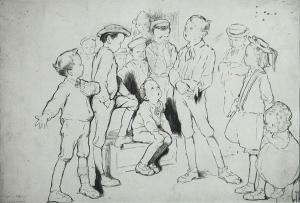
Let’s imagine you are giving a party and want to make a welcoming speech to your guests. What would you do? Probably all of the following:
- Stand where you are most visible to the people
- Project your voice out to the whole group so you are easily heard
- Try to make eye-contact with many of the guests
- Have a pleasant expression on your face and a melody in your voice
- Make them feel comfortable and welcome.
Would that be so hard? I don’t think so.
I would like to see more people take that positive presence out in public when they introduce themselves at a meeting. The tendency of most folks is to be grim and deadly serious. They put a big fat NOT in front of the five suggestions above.
Allbusiness.com, the most widely used website for small business help, asked me to work with three small business owners to improve their ‘elevator speech’ on video and now the results are online for all to see. Please go to Allbusiness.com and take a look at How to Present Your Small Business.
It is so easy to see how much improved these speakers are when they show their warmth and reach out to an audience. The next time you have an opportunity to introduce yourself, stand up, look around the group and think, “Thank you so much for coming tonight. I’m so glad to see you all!” Just think it and let your face how your warmth. People will hear you so much better.
To learn how Dr. Fleming can help you “Make a Memorable Self-introduction” please call her at 415.391-9179
How to listen when people speak
April 28, 2011 by Admin · Leave a Comment

She says to him, “When are you going to do that?”. An objective listener would have described her question as straightforward and neutral, seeking information.
She actually had two listeners; one who was in fact objective (me) and her soon-to-be ex-husband who was in no way objective. He was hurt, baffled and angry about the divorce, the betrayal, (the other man). This became evident only later, when he was recounting this conversation to someone else, as follows:
“And she just said to me: (His brow lowered, his face twisted in anger) , ‘And just WHEN are you going to DO that!!!?’”, his voice, his face, his entire body dedicated to the dramatization of accusation and intense hostility.
If you subtract what I heard in the original exchange from what he recounted in his retelling, you find yourself with a huge slug of hurt and anger that emerged completely from his emotional state. He was perfectly willing to attribute the venom to her. He was telling the truth, you understand, not about her, but about how he experienced what he had heard..
How we color what we hear
Once again, we are witness to the fact that we are emotional beings who are sometimes rational. We know that our emotions color what we say, but perhaps we are not so aware that they also color what we hear. We tend to think that we are clear observers of the life around us. In truth, we are seldom as clear as we think we are.
What can we learn from this?
- When hearing someone’s version of an event, be aware that the emotional component is usually lurking under the guise of reportage. Always use a grain of salt while taking it in.
- Most of us can’t really listen to other people when they talk because we’re so engulfed in our own emotions. To really HEAR what someone is saying, you need to be aware of your own preoccupations and set them aside so you can be more available to the other.
How to Help Employees Speak Their Best
December 2, 2010 by Admin · Leave a Comment




Here’s a difficult situation for you employers:
You have a perfectly good employee, adequate, even good in most ways, BUT, there’s something about the way they talk that is a problem: for you, for them, and for your customers.
What do you do? What should you do?
The first issue would be your ability and willingness to offer them some help.
Let’s say you are in a position to offer some speech therapy, voice coaching or communication consulting to them. You would consider this because of the investment you have already made in their training and because you sense that they would really benefit from this instruction.
The second issue has to do with how you broach the topic.
You are embarrassed because you think you are going to embarrass them, right? How do you tell someone that their speech is not good enough?
Here’s one way:
“ Pat, you are particularly good at managing your work flow and keeping reliable records. You show a good grasp of the marketing issues we have to consider. We’d like to see if we can’t bring up some of your communication skills to the same level of excellence as your other abilities. We think you would be good with more actual sales exposure. We’d like to invest in your professional development by supporting a two month program of Communication Development training.”
There. How does that feel?
I’d love to hear your reaction to this approach. Let me know if it has solved a problem for you.
…..
If you would like to help someone (family, friend or employee) work on their speaking skills, you might consider the gift of Dr. Fleming’s Holiday package: Speak Your Best!
Click here to learn more about Dr. Carol Fleming’s Gift Package, Speak Your Best!
-
"It's The Way You Say It"
is the first comprehensive guide for speech and voice improvement. Click here to purchase Dr. Fleming's book from Amazon. Network With Me
