-

Dr. Carol Fleming
-
The Freedom of Speech
December 27, 2011 by Admin · Leave a Comment
 Christopher Hitchens, the iconoclastic journalist, died of esophageal cancer this December 17. With the death of this man, we have lost a great voice indeed. Here are some words he wrote for us in the June issue of Vanity Fair. Their salience for me will be apparent; I hope they speak to you, too.
In the medical literature, the vocal “cord” is a mere “fold,” a piece of gristle that strives to reach out and touch its twin, thus producing the possibility of sound effects. But I feel that there must be a deep relationship with the word “chord”: the resonant vibration that can stir memory, produce music, evoke love, bring tears, move crowds to pity and mobs to passion.
We may not be, as we used to boast, the only animals capable of speech. But we are the only ones who can deploy vocal communication for sheer pleasure and recreation, combining it with our two other boasts of reason and humor to produce higher syntheses. To lose this ability is to be deprived of an entire range of faculty: it is assuredly to die more than a little.
My chief consolation in this year of living dyingly has been the presence of friends. I can’t eat or drink for pleasure anymore, so when they offer to come it’s only for the blessed chance to talk. Some of these comrades can easily fill a hall with paying customers avid to hear them: they are talkers with whom it’s a privilege just to keep up. Now at least I can do the listening for free.
Can they come and see me? Yes, but only in a way. So now every day I go to a waiting room, and watch the awful news from Japan on cable TV (often closed-captioned, just to torture myself) and wait impatiently for a high dose of protons to be fired into my body at two-thirds the speed of light.
What do I hope for? If not a cure, then a remission. And what do I want back? In the most beautiful apposition of two of the simplest words in our language: the freedom of speech.
……………………………………………………………………
This comes with my wishes for the happiest of New Years. Do talk, and sing, debate and laugh,
and yes, protest. Use your precious voice while you have it.
If you want to learn more about how Dr. Fleming can help you improve your communication skills, please call her at telephone 415.391.9179 or send her an email at [email protected]
Carol Fleming, Ph.D., is the author of “It’s the Way You Say It”! Becoming Articulate, Well-spoken and Clear. A comprehensive guide to vocal development and improvement of communication skills.
Amazing Grace
December 19, 2011 by Admin · Leave a Comment
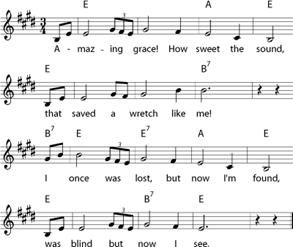
Twas Grace that taught my heart to hear…
I know! I know…now. I guess I wasn’t paying enough attention when the second verse of “Amazing Grace” rolled through my life. When I checked the lyrics of the song, before writing this, I found that out that Grace was to teach my heart to fear.
It didn’t work that way for me. Thank heavens.
While it is true that people come to me to learn about communication improvement, to get my opinion about something to do with their speech, voice or language, and to receive information and guidance, it is also true that they come to me to be heard; to have someone truly set aside all distractions, pre-judging, even focus, just to listen to the sound of their voice and receive them as wholly (perhaps holy) as possible.
What you say, how you say it and how you look when you say it. What is the first thing out of your mouth? What do you tell me repeatedly? At what point does anger creep into your voice? When does your voice wax and wane? How many bitter complaints come pouring out? Whose opinion really matters to you? When do your eyes glisten?
You have taught me to finally shut-up and let your presence register on me as deeply as possible. You have taught me that you cannot learn from me unless I have deeply listened to you first.
When you have run out of things to tell me, I will usually give you feedback on what I have just heard from you. If you are like most people, you will say, “You have hit the nail on the head!! How did you know!!” And I will have to answer, “Because you just told me.”
This is indeed an Amazing Grace that taught my heart to hear.
If you want to learn more about how Dr. Fleming can help you improve your communication skills, please call her at telephone 415.391.9179 or send her an email at [email protected]
Carol Fleming, Ph.D., is the author of “It’s the Way You Say It”! Becoming Articulate, Well-spoken and Clear. A comprehensive guide to vocal development and improvement of communication skills.
The Artists
December 15, 2011 by Admin · Leave a Comment
You’ve all heard of the importance of nonverbal communication. But have you ever wondered if it is all that it’s cracked up to be? Let me give you the evidence shown in the new film, The Artist.
- It is a ‘silent movie’ that allows you to experience how much meaning - both broad and subltle -there is to be had without words.
- Oh sure, from time to time, they throw a pinch of dialogue on the screen, but the meat of the movie is in the expressions, the context, the attitudes and movements that need no language to tell us what is going on.
- The music also moves the agenda in a nonverbal way.
Have you noticed that digital devices are fed streams – gushing rivers – of alphabetized code letters? Have we not come to see this alphabetic tidal wave as the alpha and omega of human communication?
But, have you also noticed that those who gorge themselves at the digital trough are frequently unskilled in the human nonverbal world of animal presence and subtle expression? This nonverbal world is the home of all human relationships worth having. This is the world where you are most fully alive and authentic. This is the world where you can fall in love.
See the picture and see how much of life you can know without a word being spoken.
If you want to learn more about how Dr. Fleming can help you improve your communication skills, please call her at telephone 415.391.9179 or send her an email a t[email protected]
Carol Fleming, Ph.D., is the author of “It’s the Way You Say It”! Becoming Articulate, Well-spoken and Clear. A comprehensive guide to vocal development and improvement of communication skills.
Kindly speech
November 22, 2011 by Admin · Leave a Comment
This story takes place in a lovely care-taking facility that anyone would like to have as their residence when they age and become dependent.
The little old lady in a pink chenille robe stood in the hallway of the nursing home. Her face twisted in anguish as she proclaimed to the attendant, “Somebody stole my glasses! They were right there and somebody just took them!”
What did the attendant say?
How about
Mrs Simmons! You are always putting them down somewhere and then you forget and walk off. You’ve got to be more careful!
Or
Have you looked in your pockets? Did you check your bed stand? How about the bathroom? Are you sure they aren’t on your television table?
Or
Now who’d want to go and steal your glasses anyway?! Nobody’s going to do that. You just left them where and forgot! You shouldn’t be charging people with stealing when it your own darn fault in the first place.
Did she say any of these statements?
No.
She said,
“I think that’s just terrible. I’m going to look into this and find out just who did that! Now let me take you down to dinner and we’ll get this straightened out. Don’t you worry about a thing. We’ll get those glasses back!”
We all know that Mrs. Simmons glasses were not stolen but were probably nestled under her newspaper, or bed. But Mrs. Simmons didn’t need a lecture, a scolding or the third degree. A little kindness and soothing was just the thing to solve her distress. Mrs. Simmons was not aware that a sweet kindness was bestowed on her. But I was. And now you are. Sometimes we don’t need to fix something as much as we need to understand someone.
If you want to learn more about how Dr. Fleming can help you improve your communication skills, please call her at telephone 415.391.9179 or send her an email at [email protected]
Carol Fleming, Ph.D., is the author of “It’s the Way You Say It”! Becoming Articulate, Well-spoken and Clear. A comprehensive guide to vocal development and improvement of communication skills.
Finding the sound of your voice
November 7, 2011 by Admin · Leave a Comment
 Everybody has a musical instrument and it doesn’t cost a thing. It is your voice. Nothing on earth matches it for range, power, variety, and expressiveness. You undoubtedly use it for speaking, but are you singing? You should be. We live in a sonorous universe, all matter vibrates, and all creatures sing their songs. How about you?
All god’s creatures got a place in the choir
Some sing low and some sing higher
Some sing out loud on the telephone wire
Some just clap their hands or paws or anything they’ve got nowListen to the bass it’s the one at the bottom
Where the bullfrog croaks and the hippopotamus
Moans and groans in the big tattoo
And the old cow just goes “moo”
The dogs and the cats they take up the middle
Where the honey bee hums and the cricket fiddles
The donkey brays and the pony neighs
And the old grey badger sighs ohI have heard your story that you cannot carry a tune, how the mean teacher asked you to be silent during choral singing. But I have not heard that you have spent any time seriously learning how to match notes, produce tones or tap out a rhythm. Yes, music making certainly comes easily to many of us and there are some that must seek it out. Perhaps you need to start with some simple dance steps to sense the rhythms. Or you hum along with the church choir. Imitate the bird song you hear in your garden. Or you rock your infant daughter with your best version of “My Girl”.
When all else fails there are professional voice teachers that can help you get started.
Whatever it costs you, go for it. Music making is your birthright. No one can sing your song but you. Even if you are the old grey badger that just sighs, ‘oh’. Do it. The universe will be the better for it.
If you want to learn more about how Dr. Fleming can help you improve your communication skills, please call her at telephone 415.391.9179 or send her an email at [email protected]
Carol Fleming, Ph.D., is the author of “It’s the Way You Say It”! Becoming Articulate, Well-spoken and Clear. A comprehensive guide to vocal development and improvement of communication skills.
Playing the Game of Conversation
November 3, 2011 by Admin · Leave a Comment

Managing graceful small talk appears to be a difficult challenge for many of us. Do take comfort in knowing that there are things to know and do that will be of enormous help in dealing with small talk.
One such tip is the concept of ‘turn taking’ in conversation. First let’s look at how this can go wrong:
- One person starts talking and never gives up the floor; a long story, a monologue ensues, requiring no interaction. This feels really good to the speaker and really boring to the listener.
- One person smiles and nods and asks more questions of the other (like the person above) but never really makes a contribution to the conversation. They are cheer-leaders, not players.
Two sides of the same coin, wouldn’t you say?
The solution: think of any conversation as having a format like ping-pong or tennis. There is a back-and-forthing to make a game actually happen. You hog the ball, there is no action. And there is no fun if you let every shot go by without a return.
So:
- Always strive to pass the ball (topic) to the other person by asking a question
- Avoid long stories
- Understand that putting your two cents in is a conversational obligation
- Treat other people attempts to converse with respect and encouragement
Back and forth it must go; it is an ”inter-action”.
Speak up, - but not too much!
If you want to learn more about how Dr. Fleming can help you improve your communication skills, please call her at telephone 415.391.9179 or send her an email at [email protected]
Carol Fleming, Ph.D., is the author of “It’s the Way You Say It”! Becoming Articulate, Well-spoken and Clear. A comprehensive guide to vocal development and improvement of communication skills.
Steve Jobs also gave a speech
October 20, 2011 by Admin · Leave a Comment

Speaking of Steve Jobs, as we all are, I want to draw your attention away from his colossal achievements in digital communications to his legacy in verbal communication. Rather than tell you about it, I ask you to read or listen to
Steve Jobs’ 2005 Stanford commencement address
Then I suggest you scroll around and read about his impact on the people who have heard this speech.
Ask yourself, what makes this 15 minute speech so very remarkable? How do you answer that question?
For myself, I am struck that a billionaire genius told stories about
1. dropping out of college
2. getting fired from his own company, Apple
3. facing cancer and death
I see a man who took this commencement opportunity to reach deeply into himself and produce the greatest truths of living that he could offer.
- The authenticity is unmistakable.
- The message is bone clear in its simplicity.
- We hear him speak from humility and love.
A student, Kjerstin Erickson, said: “It was about the inevitability and unavoidability of death — and the importance of putting yourself out there, at risk, for humanity,… Because what else, really, is there?”
He was a leader in uniting the world in digital communication and a model of drilling deep into his own personal meaning to share with this world. Genius or no, you can follow the lead of Jobs and search for your own inner truth, find its simple expression, and share with others in an attitude of humble service.
What else, really, is there?
……………………………..
If you want to learn more about how Dr. Fleming can help you improve your communication skills, please call her at telephone 415.391.9179 or send her an email at [email protected]
Carol Fleming, Ph.D., is the author of “It’s the Way You Say It”! Becoming Articulate, Well-spoken and Clear. A comprehensive guide to vocal development and improvement of communication skills.
The advantages of a sexy voice
September 27, 2011 by Admin · Leave a Comment
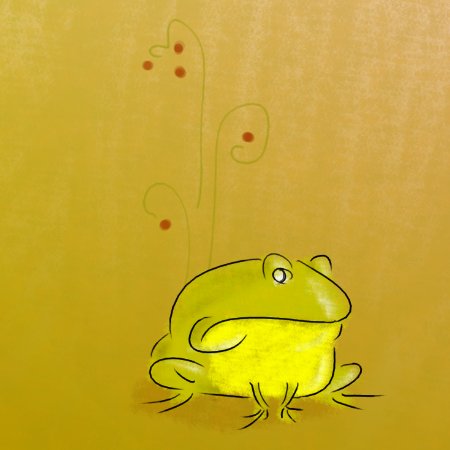
Let’s say you are the biggest bullfrog in the pond. .. Because you are the largest frog your voice (croak, mating call) will have a lower pitch than that of the other males. You will croak to let the lady frogs know where you are and they will be driven mad with desire by the sound of your deep froggy voice. The lady frogs will make their way to you, for clearly, you are the alpha male in this pond.
BUT the other male frogs who have the less compelling voice, know about the drawing power of this lower voice and use it to their own advantage. They position themselves around the Big Frog and lie in wait for the ladies who are approaching him. They nab a passing female and try to become a parent.
While this approach probably does not provide useful guidance for the gentlemen reading this blog, it does confirm that the lower voice in the male has certain advantages. If you examine the relative pitch levels of the parent and the infant in any species, you will find that the parent has the lower voice. Now imagine the voices of the predator and the prey. Same difference. The lower voice communicates size, power and, maturity. Ladies do find this to be sexy.
If you want to develop a sexy voice, please send an email to [email protected]
How I Listen to The Sound of Your Voice
August 9, 2011 by Admin · Leave a Comment

What is the impression you make by the way you speak? I ask myself that when you sit across the table from me in my office. You have come to gain some understanding of your communication patterns and I bring my professional background and years of experience to help you do just that.
When I am first meeting a client, I will consciously drop my awareness from concentrating just on their words and their intended message in order to be maximally receptive to more dimensions of their communication.
As you come in the door, I try to become a ‘blank slate’ on which you write your presence. I try, knowing I will never be completely neutral, but I will try to observe with the kindest part of my self. If there is something that keeps nagging at me, I assume it will catch the attention of others and distract from the communication relationship. I will have to address the topic. What I observe are all the things that you can see in other people, what the person is trying to see in the mirror, and what they don’t know they are doing when they talk. So I see the nervous gestures, the unconscious habits.
And I must listen. I invite my intuition, I listen to the words with my mind and I hear the message with my heart. I give undivided attention to you. This is total and deliberate listening that lets you be heard in the deepest possible way. What I have received and accepted, I can reflect back to you (as best I can), so you, too, can listen to your whole self- mind, body, soul and heart. You see, there is more to your speaking than your voice and articulation! Perhaps I can help you see – and hear- more of you.
It is likely that you are thinking that there are tics and twitches, uhms and ‘likes’ to be discovers. Yes, there is always that. But it is not uncommon for a person to observe, “I’m a lot better than I thought I was”, after hearing the recording I have made of our interview.
Whatever we find as we talk together, it is sure to bring you closer to yourself; to hear yourself outside your own head, and to see yourself beyond the mirror. It is a singular experience for both of us as you adventure beyond your confines and I lose myself in you.
Getting to Know the Sound of Your Voice
August 4, 2011 by Admin · Leave a Comment

The Sound of Your Voice
To listen to the blog posting in Audio, please click here —- Getting to Know The Sound of Your Voice
Do you want to know the impression you make by the way you speak?
I can help you do it in a way that won’t cost you a dime.
But, do I believe you will actually do this? No. So prove me wrong!
What to do:
Create a time for you and few (same sex) friends to get together around a good recording device, sit equidistant from the microphone, hit ‘record’….now talk to each other. Let’s say you chat about this or that for 20 minutes. Turn it off, rewind, take a lunch break, then sit down and listen.
What you might listen for:
- Who is doing the most talking?
- Who does the most interrupting?
- Who talks too softly to be heard?
- How low or high is your voice relative to the other people in the group?
- Can you understand yourself as easily as you do others?
- Do you like the sound of your laughter or are you embarrassed to hear that you sound like a Canadian goose?
- Do you hear something in your speech that you don’t like, like ‘like’?
- Does your voice sound flat as a board or should you consider opera?
And so on. Don’t worry; you’ll find much to notice. This may be a painful experience, OR you may well find much that you are pleased with.
I encourage your courage. This exercise allows you to know how you really interact with other people, more than I could possibly predict from a private interview. Consider how valuable this could be for you.
My offer: Do this exercise and write a short report on your communication behavior as you observed it on the recording. Send your report to me. (I can’t wait to read it!) I will write a blog about your findings. You can stay anonymous in the blog posting, should that be your choice. And I will send you a copy of my book, It’s the Way You Say It: Becoming Articulate, Well-spoken and Clear. Deal? I look forward to hearing from you.
-
"It's The Way You Say It"
is the first comprehensive guide for speech and voice improvement. Click here to purchase Dr. Fleming's book from Amazon. Network With Me
